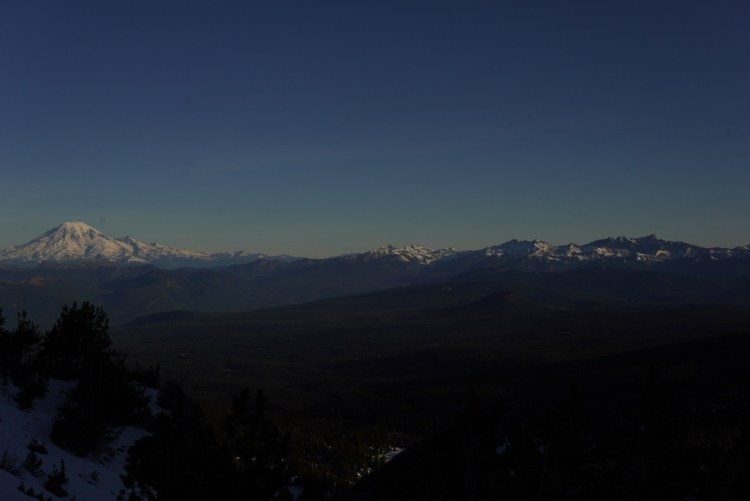
The allure of Takhoma has long preceded the brutal conquest that replaced names of its features with names adapted for the English tongue. Ascending its trails and traversing its glaciers with these adapted names lures us into forgetting the history carried in this land. Naming is a central act of building a long-standing connection with the landscape; with this power, connections and long-standing ones can be severed. Takhoma, known as Mt. Rainer in English, has been a feature of allure long before the colonial conquest of these lands. The conquest of these lands also extended to the highest summits and consequently fostered the culture of climbing we have inherited today. Even though I, a native person, once set out to conquer this sacred mountain for selfish intent, I have educated myself on this sacred place’s original caretakers and name-givers. This original name reflects an ethic of reciprocity. Before I learned about this relationship of such things, I sought to only take from his — Takhoma’s — hands to put into mine. However, personal growth and education have opened my hands, and as I now raise them to him (Takhoma) in thanks, I reach out to help others grow and learn as I have.

If you also seek the summit, educate yourself on the history and facts behind the Indian removal from these lands. Acknowledging the removal of children from their families and the cultural genocide at boarding schools like Fort Simcoe on the Yakama Reservation is a pathway toward reparation and justice. Within education and awareness of these atrocities lay justice for the Yakama People and solutions to work together as different communities share spaces on Turtle Island. One easy thing you all may do to work for this is to begin your journey of education on Indigenous erasure here within Takhoma’s reach. I enact this responsibility as the next Cowlitz and Yakama Mountain Guide, following Chief Sluiskin’s legacy. Aspiring to heighten Indigenous voice and presence on Takhoma, I seek to perpetuate the teachings and wisdom of elders like Sluiskin. However, it cannot be completed without education on Isaac and Hazard Stevens’ roles with the Indigenous Peoples of Washington. As the Governor of WA in the 1850s, Isaac oversaw the murder of Chief Leschi and the atrocities of the Yakima Wars. Whereas Hazard partook in Indigenous erasure on his ascent of Takhoma, effectively contributing to a stereotype of Indian culture being dead and stuck in time. I imagine my life was not envisioned by Chief Sluiskin of the Yakama and Cowlitz Nations, although I am sure he would be proud. I am another Yakama and Cowlitz Mountain Guide on Takhoma, where Sluiskin was the first. This legacy I work in would not exist without him (Sluiskin), though its barriers were established by Isaac and Hazard Stevens’ legacies.
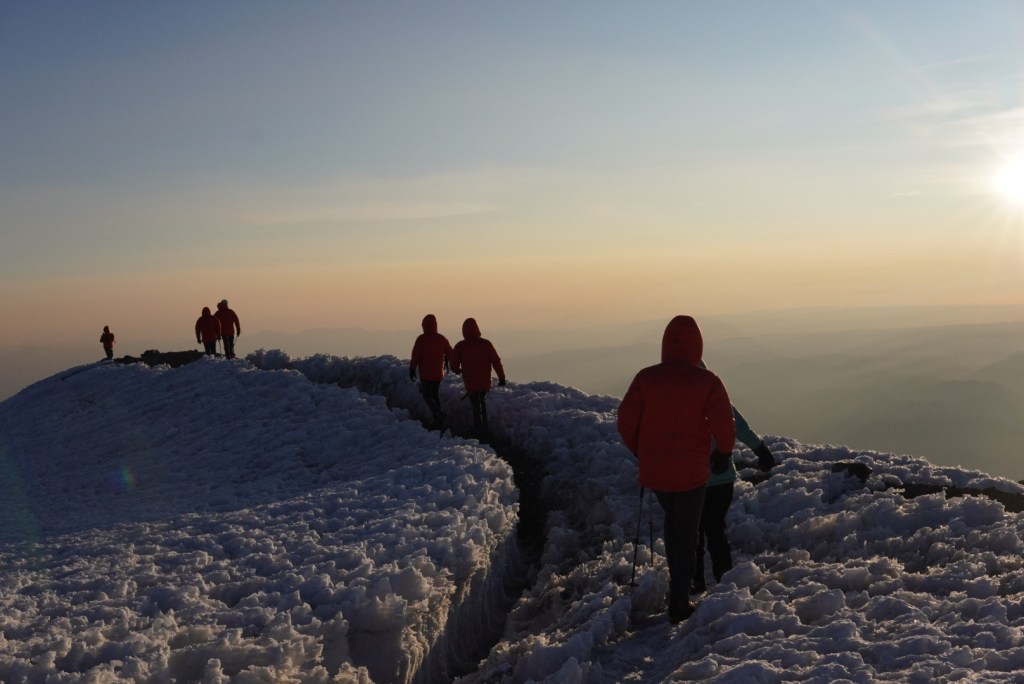
My people, the Yakama, would visit Me-Yah-ah Pah in the spring as a fairweather village; they would subsist off the land, living close to our mother of water and life. My people, the Yakama, sought their Honorable Harvest on the mountain’s East side. Engaging in seasonal hunting, berry picking, and ceremony, the Yakama are a few of the many who continue to give thanks to Takhoma. Through time, foreigners’ intense curiosity for exploration grew into greed for conquering nature. Sieging to ‘tame’ the ‘wild’ nature, colonizers imposed new purposes for these sacred areas to only serve humans, breaking the engagement of reciprocity. This newly assigned purpose flows only through the path of greed and consumption. To the West of Takhoma, the Cowlitz, Muckleshoot, Nisqually, Puyallup, and Squaxin Islands remain stewards to their respective sacred lands. Formed and segregated as a national park in 1899, the boundary of more than 200,000+ acres was shaped by treaties established with these six nations. The Medicine Creek Treaty of 1854 and the Yakama Nation Treaty of 1855 are the de jure rule of what is now called Mt. Rainier National Park. These treaties continue to be ignored, neglected, and tarnished by those who call themselves ‘leaders’ of the established park. The National Park Service (NPS) stated in the Historical Overview of Indians and Mount Rainier that“…Mt. Rainier National Park, like other national parks, commemorated Indians’ past use of the area through Indian place names”; claiming this is a “white American fondness for Indian names’ as a ‘form of nationalism.’” This statement shows extreme irony and bigotry as Indian names, words, culture, and identity were meant to be killed in boarding schools with the motto – Kill the Indian, save the man.
Native Americans were ultimately removed from the proximity of Takhoma while settlers moved in and began their conquests for the summit, a place previously not for the two-legged. In the days of Sluiskin of the Upper Cowlitz, Chief Si’ahl of the Duwamish from which the city of Seattle is named, Takhoma’s summit was not a place for the two-legged. A Yakama story I have read tells of a man once who pushed to the summit in the name of greed. Upon reaching the summit, he found Takhoma’s riches but was warned of the cost of his greed and selfishness. Along his journey, this man lost the way of his elders and community. He forgot his people’s ethics and the respect you give back to the land. In the story’s resolution, the man re-buries the treasure for no one, not for someone else to find, as it only belongs to Takhoma. Desiring to own and have control of the domain over Takhoma is dubious. I do not own Takhoma even though my people have been around since time immemorial. Instead, we are stewards watching over the well-being of the land and the continuation of it for the sake of future generations and all to benefit from.
Experiencing the nourishment and nurture of being on the land, I now know I am not the only Urban Indian who may connect to their culture. You see, I did not grow up with my community or my culture. I grew up in the city, an urban environment detached from other Indigenous people and cultures. Until I had made connections and relationships with the land, my Indigenous identity meant nothing more than an enrollment number and I.D. Just the way the forces of colonization had planned. But upon overcoming this systemic barrier and oppression, I know I am not alone, and others need space to move up. Through this new perspective gifted from Takhoma, there is something the two-legged can learn and pass on if an understanding of reciprocity is upheld.
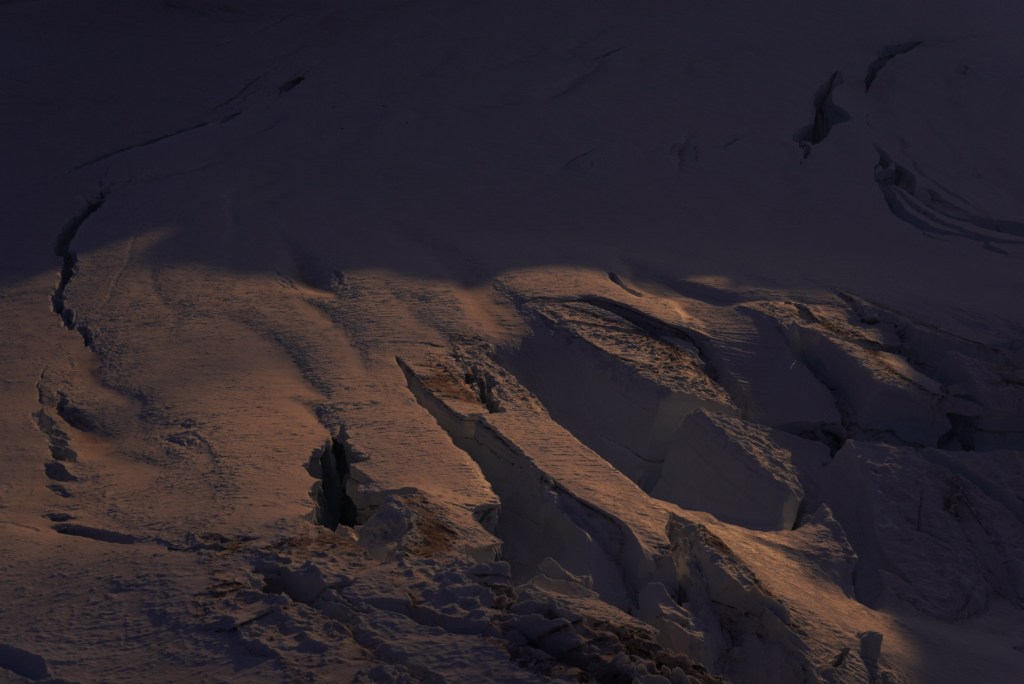
It was not until I received an education from my peers, elders, community, and mentors that I earned this treasure — A commodity more valuable than buried gold — and it is my turn to pass this wisdom on. To the other two-legged who seek to conquer the wilderness, to the Urban Native kids who do not have community or identity. To my clients when they rope up with me. To those who seek Takhoma’s summit. During my days of peak-bagging and ‘conquering’ mountains, I, too, was lost like the Yakama man, searching for mythic treasures buried high on mountain summits. This gift is never truly yours; it belongs to the next person to come and to those behind them. It may come in self-restoration after trials and tribulations or after a sense of accomplishment over triumphing physical or mental boundaries. Whichever it is, once you find it with Takhoma, be sure not to wield it. Knowledge and education are not weapons. Walk with it. Share with those in your community what you will do with this new knowledge. Utilize what you were gifted to educate your family and community because making them aware of the journey will spoil Takhoma’s gift.
Whether you reach the summit or not, Takhoma has given you energy. I ask that you redirect it so that it may enrich others.
Sincerely,
Cal’ James Smith, grandson of Red Smith of the Yakama and Yvonne Vivette of Grand Ronde

 Yakama Alpinism